Picture standing in front of Michelangelo’s David, a 17-foot marble figure so anatomically precise it’s hard to believe it was carved by hand over 500 years ago, and then just a few hours later sitting in a vineyard in the rolling Chianti countryside, glass of Chianti Classico in hand, a medieval hilltop town visible in the distance. That combination of world-changing Renaissance art and genuinely idyllic countryside is exactly why Florence works so well both as a standalone city break and as a launchpad into the rest of Tuscany.
Seeing Michelangelo’s David at the Accademia Gallery
Florence’s Accademia Gallery houses Michelangelo’s David, widely considered one of the greatest sculptures ever created, and skip-the-line tickets are essential during peak season since the gallery limits how many visitors can enter at once to preserve a reasonable viewing experience. Many visitors pair a David viewing with the nearby Uffizi Gallery, home to Botticelli’s Birth of Venus and an extraordinary collection of Renaissance masterworks, often visited together on a single guided walking tour.
Climbing Brunelleschi’s Dome at the Florence Duomo
The Florence Cathedral, topped by Filippo Brunelleschi’s engineering marvel of a dome, completed in 1436 without the use of scaffolding techniques that would seem obvious today, remains one of the largest masonry domes ever constructed. Climbing the 463 steps to the top rewards visitors with sweeping panoramic views over Florence’s terracotta rooftops, and booking an entry time slot online in advance, since access is limited to protect the historic structure, is essential rather than optional.
Day-Tripping Into the Chianti Wine Region
Just an hour outside Florence, the Chianti countryside offers rolling vineyard-covered hills along one of Italy’s most scenic drives, with full-day wine tours typically visiting two wineries for tastings of Chianti Classico, Brunello di Montalcino, and Super Tuscan wines, alongside olive oil and balsamic vinegar sampling, for around $70 to $85 per person. Many of these tours also stop in San Gimignano, a medieval hilltop town famous for its skyline of towers built by competing wealthy families centuries ago, adding a historic detour to the wine-focused day.

FLORENCE & TUSCANY REVEALED
Your Experience in 5 Days
Day 1: David & The Duomo
Accademia Gallery (Michelangelo's David)
Location: Via Ricasoli, 58-60, 50129 Florence, Italy
Fee: approx. €16 + approx. €4 booking fee (closed Mondays)
Home to Michelangelo's 5.17 m David, carved 1501-1504 from a single block of marble, plus his unfinished Prisoners that show his sculpting process.

Florence Cathedral & Brunelleschi's Dome
Location: Piazza del Duomo, 50122 Florence, Italy
Fee: Cathedral free; Brunelleschi Pass approx. €30 (dome climb requires timed booking)
Santa Maria del Fiore was consecrated in 1436. Brunelleschi's dome, an engineering marvel built without scaffolding, remains the largest brick dome ever constructed.

🍽️ Dining Along Your Route
Day 2: Uffizi & Piazza della Signoria
Uffizi Gallery
Location: Piazzale degli Uffizi, 6, 50122 Florence, Italy
Fee: approx. €25-29 (closed Mondays)
Housed in a 16th-century Medici administrative building, the Uffizi holds Botticelli's The Birth of Venus, Leonardo's Annunciation and works by Michelangelo and Raphael.

Piazza della Signoria
Location: Piazza della Signoria, 50122 Florence, Italy
Fee: Free
The political center of Florence since the 13th century, dominated by Palazzo Vecchio and the open-air sculpture of the Loggia dei Lanzi, with a replica of David.

🍽️ Dining Along Your Route
Day 3: Oltrarno: Pitti & Boboli
Palazzo Pitti
Location: Piazza de' Pitti, 1, 50125 Florence, Italy
Fee: approx. €16-22 (closed Mondays)
The monumental Renaissance palace was bought by the Medici in 1550 and later housed Italian kings. It holds the Palatine Gallery with works by Raphael and Titian.

Boboli Gardens
Location: Piazza de' Pitti, 1, 50125 Florence, Italy
Fee: approx. €10 (usually included in Pitti pass)
One of Italy's finest Italian gardens, designed in the 16th century with statues, fountains and views over Florence, behind Palazzo Pitti.

🍽️ Dining Along Your Route
Day 4: Chianti & San Gimignano
Chianti Classico Vineyards
Location: Castellina in Chianti, 53011 Siena, Tuscany, Italy
Fee: approx. €40-80 per person for tasting tours
The Chianti hills between Florence and Siena produce the Sangiovese-based Chianti Classico DOCG wine, marked by the Black Rooster emblem.

San Gimignano
Location: Piazza del Duomo, 53037 San Gimignano, Siena, Tuscany, Italy
Fee: Free; Torre Grossa approx. €13; Collegiata approx. €5-6
Known as the Medieval Manhattan, San Gimignano has 14 surviving towers from the 12th-13th centuries, with a UNESCO-listed centre known for Vernaccia white wine.

🍽️ Dining Along Your Route
Day 5: San Lorenzo & Ponte Vecchio
San Lorenzo Market
Location: Piazza del Mercato Centrale, 50123 Florence, Italy
Fee: Free entry; food approx. €10-20
Florence's historic market features leather stalls outside and Mercato Centrale's two-floor food hall inside, with Tuscan produce and ready-to-eat dishes.

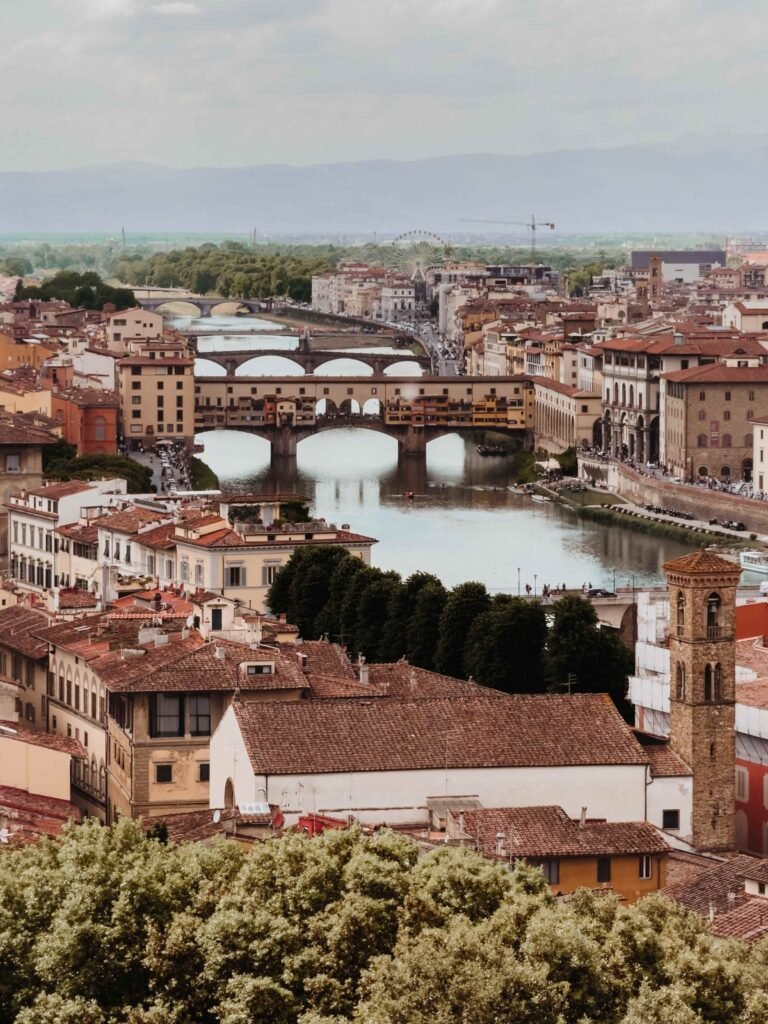
Ponte Vecchio
Location: Ponte Vecchio, 50125 Florence, Italy
Fee: Free
Florence's medieval bridge over the Arno, rebuilt in 1345, has been lined with goldsmith shops since the 16th century, and it was the only bridge spared in 1944.

🍽️ Dining Along Your Route
Practical Travel Guide
How much does a Chianti wine tour from Florence cost?
Full-day tours visiting two wineries with multiple tastings, olive oil, balsamic vinegar, and a stop in San Gimignano typically run $70 to $85 per person, with pricing varying based on group size and whether lunch is included beyond the tasting snacks.
How much does it cost to see Michelangelo’s David?
Standard Accademia Gallery admission with an audio guide runs about €20 to €25, while skip-the-line guided tours combining David with the Uffizi Gallery typically run $100 to $170 per person depending on group size and inclusions.
How many days should you spend in Florence and Tuscany?
Five days works well for most travelers, three days exploring Florence’s museums, churches, and historic center, plus at least one full day dedicated to a Chianti wine tour or Tuscan countryside excursion.
Is it worth renting a car to explore Tuscany independently?
For travelers with some driving confidence and more time to spend, yes, a rental car offers the flexibility to explore lesser-known hilltop towns at your own pace, though most first-time visitors on a shorter trip find an organized day tour from Florence simpler and less stressful for a single-day countryside excursion.
FREQUENTLY ASKED QUESTIONS
Planning the perfect adventure doesn’t have to be complicated. To help you along the way, we’ve rounded up the most common questions every traveler asks before and during their trip.
Our Top Recommendation
The Best Way to Experience This Destination
Start planning your trip
enjoy
Florence and the surrounding Tuscan countryside deliver two distinct but equally memorable experiences, world-changing Renaissance art within a walkable historic center, and some of Italy’s most celebrated wine country just an hour outside the city. Whether you’re standing before Michelangelo’s David or sipping Chianti Classico with a medieval hilltop town in view, this combination captures why Tuscany remains one of Italy’s most beloved regions..
See the full itinerary